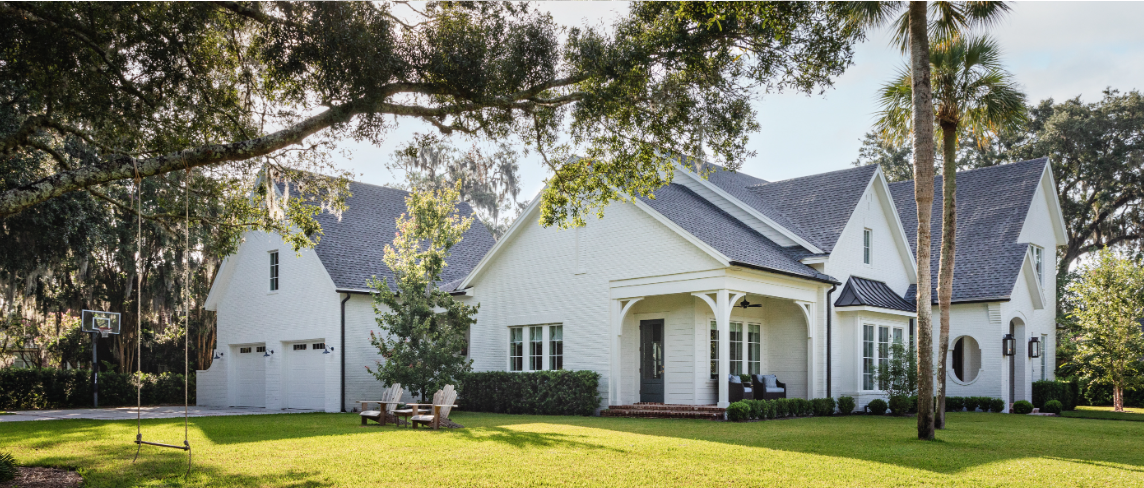
Sometimes the place comes first.
You may already own a property that has been in your family for years. You may have found a homesite with the privacy, views or setting you have been looking for. Or you may simply know where you want to live and want the home itself to be designed around that decision.
Building a custom home on your own lot creates that opportunity.
But owning the land does not mean there are no constraints. Setbacks, flood conditions, soils, drainage, utilities, access, existing trees and community requirements can all influence what can be built. In some cases, those conditions become important design considerations themselves.
The advantage is not unlimited freedom.
It is the ability to understand the property, decide what matters to you and design a home that responds specifically to both.
Here are five advantages of building a custom home on your lot in Northeast Florida.
Advantage #1: You Choose the Place Before the House
For some homeowners, where they live matters just as much as the home itself.
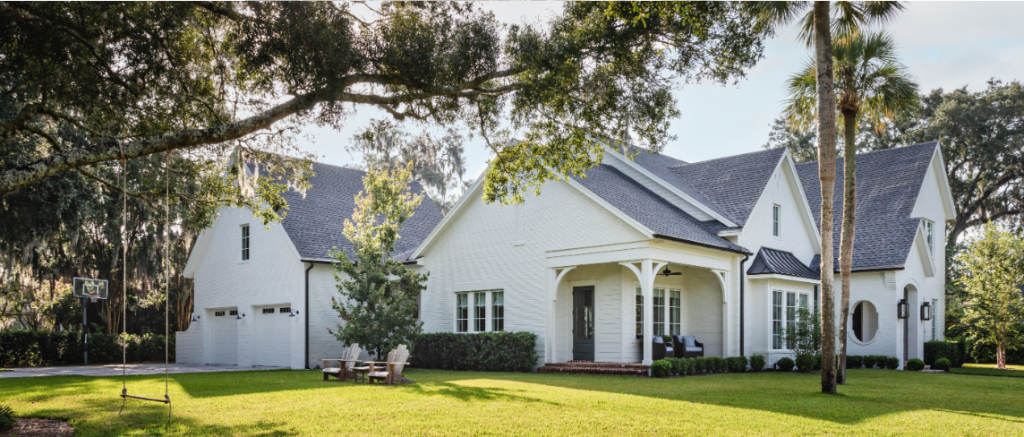
A particular property may offer mature trees, water or preserve views, proximity to family or a place within an established neighborhood you already know well. The homesite may have qualities worth allowing the architecture to respond to rather than treating the property as secondary to the house.
Building on your own lot allows the property to become the starting point.
That does not mean every lot can accommodate every idea. Before design advances too far, the property needs to be understood.
Flood zone and required elevation, setbacks, soils, drainage, utilities, site access, existing trees and community requirements can affect the home’s design, cost and timeline. Coastal properties may introduce additional considerations related to exposure, elevation and permitting.
In Northeast Florida, these conditions can vary considerably from one property to another.
Understanding them early allows the home to respond to the place rather than forcing a design onto a site that may not support it well.
Advantage #2: The Home Can Be Designed Around the Property
A custom homesite gives the architecture something specific to respond to.
Perhaps the best view is toward a preserve or water. Privacy may matter most along one side of the property. Mature trees may influence where the house sits. Morning and afternoon sun can affect outdoor living areas as well as the rooms that open onto them.
These are not secondary considerations. They can become part of the architecture.
In San Marco, that might mean considering how a new home settles among mature trees and an established streetscape. At the Beaches, salt exposure, strong sun, flood conditions and the movement between indoor and outdoor spaces may shape decisions differently. On a preserve lot in St. Johns County, orientation may be driven by privacy, views and the relationship between interior rooms and the landscape beyond them.
The result is not simply a custom floor plan placed on a piece of land.
The property and the home begin informing one another.
That relationship is one of the defining advantages of designing for a specific homesite.
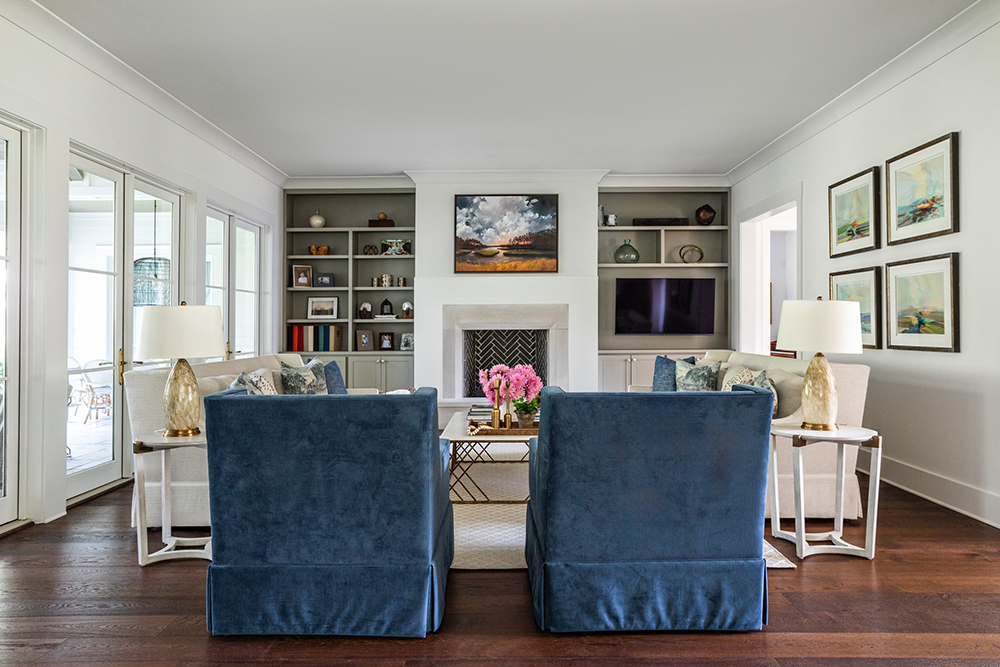
Advantage #3: You Can Design Around How You Actually Want to Live
Building a custom home on your own lot also creates an opportunity to reconsider assumptions you may have accepted in previous homes.
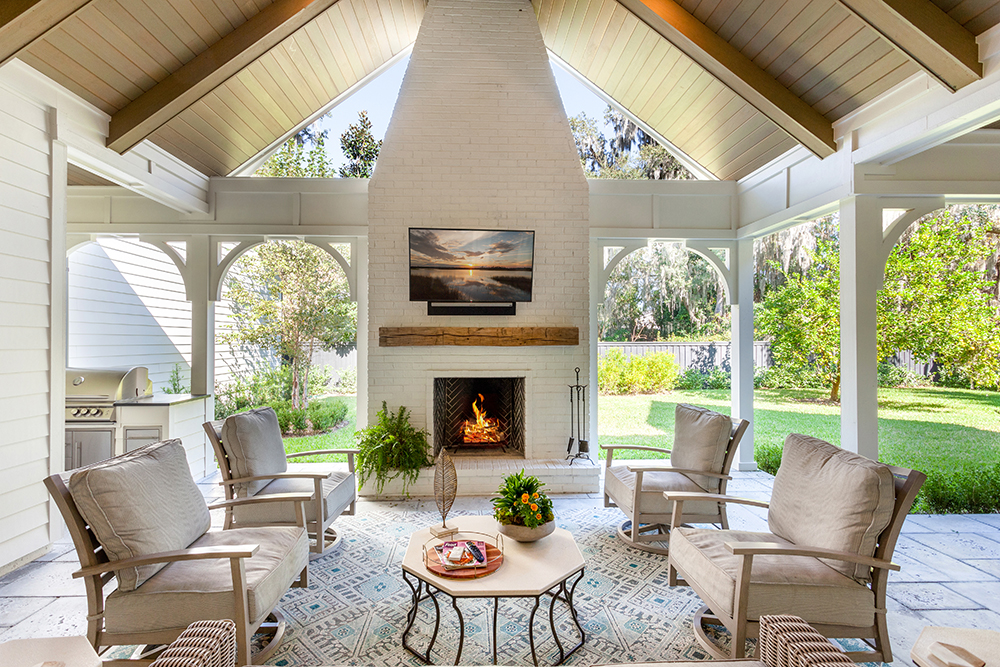
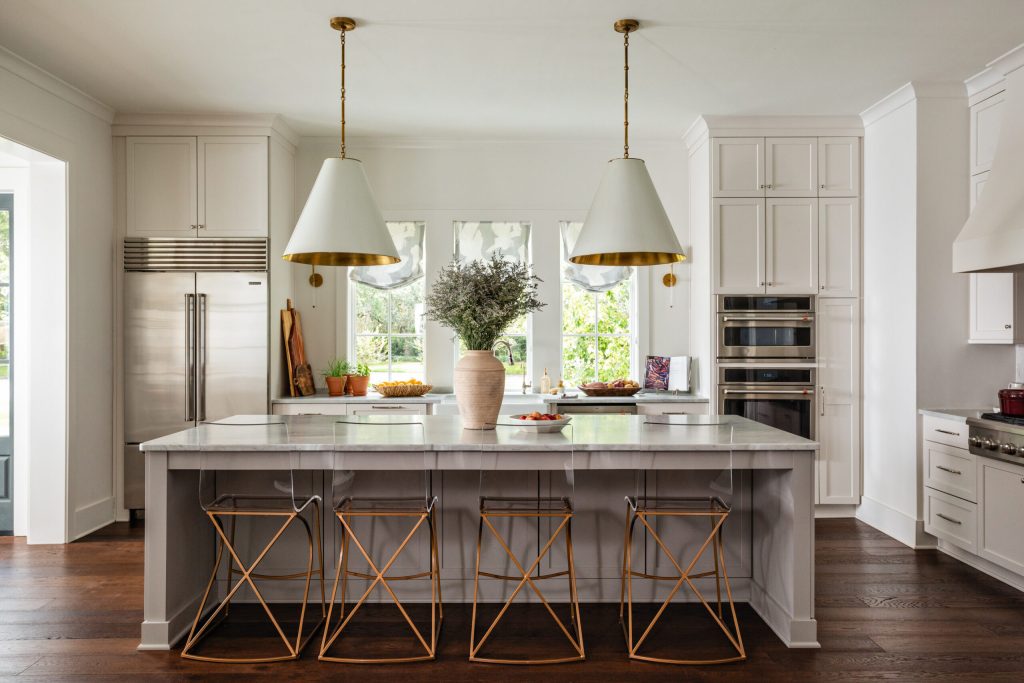
You may want a kitchen that works comfortably when several people are cooking. Outdoor living may need to connect directly to the rooms your family uses most. Adult children or frequent guests may need privacy without feeling removed from the rest of the home. Storage can be considered around where things are actually used, alongside circulation, room relationships and the rhythms of daily life.
The primary suite, home office, arrival sequence, entertaining spaces and relationship between public and private rooms can all be considered around the way you live.
At Tidewater, those conversations begin before finish selections.
Our Director of Design is involved during preconstruction and space planning, helping consider how rooms relate, how the home moves and where design decisions can make daily life work more naturally.
Custom does not have to mean making more decisions.
It can mean making the decisions that are distinctly yours with experienced guidance around the ones you should not have to solve alone.
Advantage #4: Important Site and Cost Considerations Can Be Understood Earlier
Owning the land gives the team a specific property to understand, but it does not eliminate uncertainty from a custom home project.
Site preparation can vary considerably depending on the homesite. Clearing, grading, drainage, soils, utilities, elevation, access and other property conditions may affect both the work required and the cost of construction.
This is why Tidewater evaluates site conditions before pricing.
The objective is not to promise that building on your own lot will cost less. It is to understand as much as reasonably possible about the property before decisions are carried too far.
Understanding the site early gives the homeowner better information for the decisions that follow.
A drainage condition may affect site planning. An elevation requirement may influence the foundation and relationship between the home and grade. Utility access may affect site work. Setbacks may change where the house can sit or how certain spaces are oriented.
These are professional considerations the homeowner should understand when they affect meaningful decisions. They should not become another project for the homeowner to manage.
Advantage #5: You Can Choose the Team You Trust to Carry the Project Through
When you own the homesite, you can choose the builder you want responsible for what happens there.
That decision deserves more consideration than comparing proposals, portfolios or lists of features.
A custom home requires architectural planning, design judgment, engineering, permitting, site coordination, construction oversight and many decisions that ultimately have to work together.
The homeowner should remain close to the decisions that require their perspective.
They should not have to become the person responsible for coordinating the professionals, catching preventable conflicts or managing construction themselves.
At Tidewater, the same small team remains involved as the home moves from early planning through construction. The Director of Design is connected during preconstruction and design development. Our Construction Director is on Tidewater jobsites daily. Clients have direct access to the people responsible for their home as well as a private project portal where drawings, selections, budget, schedule, changes and communication remain organized.
The advantage of choosing your builder is not simply that you get to choose who builds the house.
You get to choose who you trust to carry the responsibility of building it.
What Building on Your Own Lot Does Not Mean
Building on a client-owned homesite offers meaningful advantages, but it is important to separate those advantages from assumptions about what lot ownership makes possible.
Owning the property does not necessarily mean there are no architectural or community restrictions. It does not mean every home design will work on the site. It does not guarantee minimal site preparation or make future expansion automatically possible.
It also does not mean the homeowner needs to arrive with completed architectural plans.
A property may still be subject to zoning, setbacks, easements, flood requirements, community architectural standards and other conditions. Certain coastal properties may also be subject to additional state requirements.
The right custom process accounts for those realities rather than treating them as obstacles discovered later.
That is why understanding the property belongs near the beginning of the process.
Should You Talk to a Custom Home Builder Before Buying a Lot?
Yes, involving a custom home builder before purchasing land can be valuable.
A property can be beautiful and still carry conditions that affect the home you hope to build there.
Before purchasing a homesite, Tidewater can help identify factors such as flood zone and required elevation, setbacks, soils, drainage, utilities and site access. Those findings can provide a clearer understanding of how the property may influence the design, cost or timeline before you commit to it.
If you already own the land, the same evaluation helps establish the conditions the design and construction team will need to work with.
The purpose is not to find a property without constraints.
Every property has conditions.
The purpose is to understand them early enough to make informed decisions about what belongs there.
Building on Your Lot With Tidewater Homes
Tidewater builds custom homes on client-owned properties throughout our defined Northeast Florida service area, from established Jacksonville neighborhoods and the Beaches to northern St. Johns County.
The right property does not remove constraints. It gives the design something meaningful to respond to.
When the homesite, architecture, design and construction are considered together, the result can be a home that belongs to its setting as clearly as it belongs to the people who live there.
Can I Build a Custom Home on Land I Already Own in Northeast Florida?
Yes. Tidewater builds custom homes on client-owned properties within our defined Northeast Florida service area. The process begins with understanding the homesite and identifying conditions that may influence the design, cost or timeline.
Should I Contact a Custom Home Builder Before Buying a Lot?
It can be valuable to involve a builder before purchasing property. Flood zone and elevation requirements, setbacks, soils, drainage, utilities, access and other conditions may affect what can be built and the work required to build it.
Can I Use My Own Custom Home Plans?
Yes. Tidewater can work with plans you already have, tailor an existing plan or work with an architectural partner to develop a home around your property and priorities.
Does Building on My Own Lot Mean I Can Design Anything I Want?
No. A client-owned lot may still be subject to zoning, setbacks, easements, flood requirements, community architectural standards and other property-specific conditions. Custom design allows the home to respond thoughtfully to those conditions rather than eliminating them.
What Site Costs Should I Consider When Building on My Own Lot?
Site-related work can vary by property and may include clearing, grading, drainage, utilities, access, foundation or elevation requirements and other work necessary to prepare the homesite for construction. Site analysis helps identify relevant conditions before pricing is established.
How Long Does It Take to Build a Custom Home on Your Own Lot?
Most Tidewater custom homes take approximately 16 to 20 months from the beginning of design through completion. Design and permitting generally account for about six months, followed by approximately 10 to 14 months of construction. The homesite, scope and level of detail can affect the timeline.
Where Does Tidewater Build on Client-Owned Lots?
Tidewater serves a defined Northeast Florida footprint that includes Jacksonville’s southern and eastern neighborhoods, from Ortega through San Marco and Mandarin, east to Atlantic Beach and south through Ponte Vedra Beach and northern St. Johns County.